The development cooperation policy
Brussels International is the administration responsible for implementing Brussels’ development cooperation policy.
Since the mid-1990s, the Brussels-Capital Region has been building partnerships and developing cooperation projects with capitals and regions in developing countries.
During the 2014-2019 legislature, the Region wanted to increase its commitment, raise the profile of its international solidarity initiatives and integrate them more fully into a policy in its own right:
The Brussels development cooperation policy
- This policy covers direct bilateral cooperation, indirect bilateral cooperation, multilateral cooperation as well as emergency humanitarian aid provided by the Brussels-Capital Region.
- Since 2017, the vision, strategic aims and principles governing the development cooperation initiatives have been defined in a framework ordinance.
- The content of the framework ordinance is clarified by five thematic implementation decrees.
- A specific annual budget is allocated to the development cooperation policy. The evolution of the budget is visible in the annual reports.
| Development cooperation is an investment in a more sustainable world for everyone. It promotes solidarity and peace in an interdependent and complex world. To mitigate future crises and meet global challenges, investing in development, prevention and resilience is an effective long-term response. |
A focus on regions and urban challenges
The Brussels-Capital Region has defined its own identity in terms of development cooperation, focusing exclusively on (peri-)urban areas and specifically urban issues. Its activities are based on two key pillars:
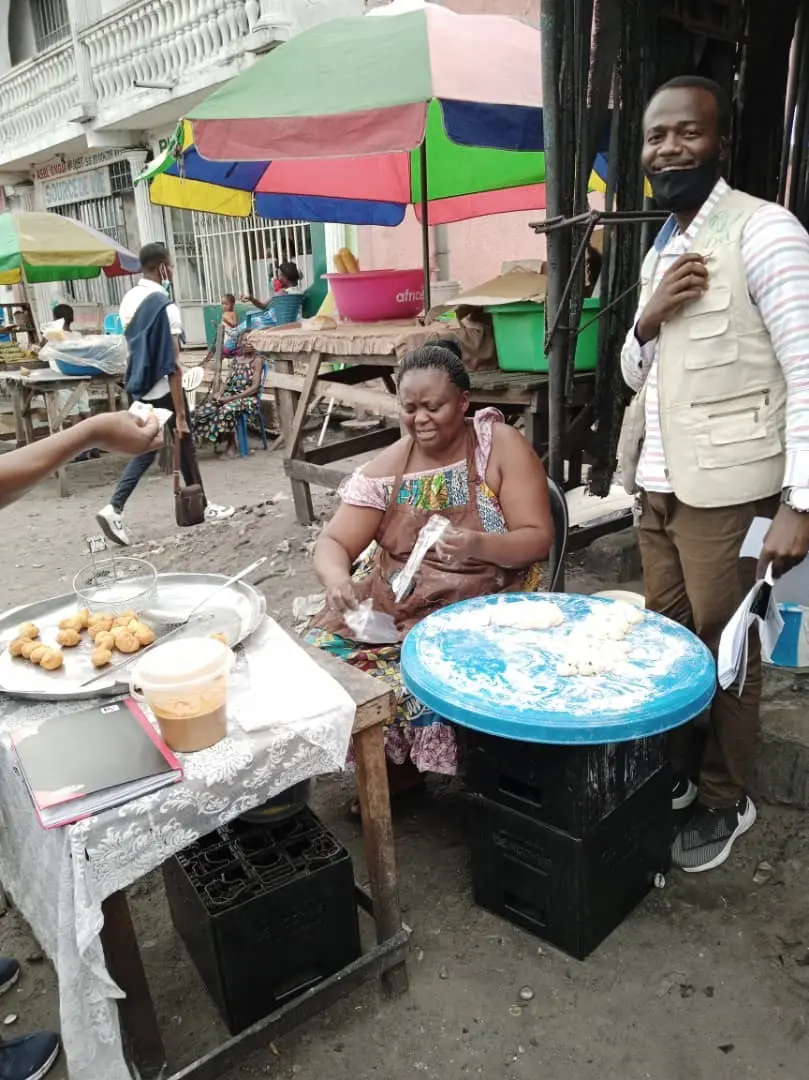
- the sustainable development of urban environments, in partnership with local authorities in developing countries (partnerships with the City-Province of Kinshasa, the Rabat-Salé-Kénitra Region and the governorates of Ramallah and A-Bireh)
- raising awareness among Brussels citizens as people showing solidarity and global citizens.
This approach reflects both the External linkcompetencies devolved to the Brussels-Capital Region and its social and cultural diversity.
Brussels International also represents the Region in the Opens in new windowPlatforma network. This is a pan-European coalition of local authorities – cities and regions – as well as their associations involved in development cooperation. For more information, visit the international networks section.
The principles behind Brussels' development cooperation
The Opens in new windowDevelopment Aid Committee (DAC) of Opens in new windowthe Organisation for Economic Co-operation and Development (OECD) has defined several Opens in new windowguiding principles to guide and improve the quality of development cooperation. These principles apply to donor countries, including DAC members, with the aim of making the aid more effective, coherent and geared towards sustainable results.
As Belgium is a member of the DAC, Brussels’ development cooperation is fully in line with this approach. Here are a few examples of how these principles are implemented:
Transparency enables Brussels International to be accountable to its stakeholders (grant recipients, government, parliament, citizens, etc.). It contributes to the good governance of the administration. The aim is to share reliable, regular and accessible information about its activities, funding, strategic objectives and results.
Annual reports about Brussels’ cooperation activities
Every year, Brussels Internation publishes a general annual report on all its activities, as well as a specific report on Brussels’ development cooperation. This report presents the activities carried out and funded over the past year, some of the obtained results and a number of recommendations.
It is sent to the Brussels parliament members and, on a wider scale, to all relevant stakeholders, via Brussels International’s digital communication channels.
The annual reports can be consulted via this link.
Reporting on subsidised projects
Beneficiaries of BI grants also have the responsibility to account for the proper use of public funds. They must therefore submit a financial and narrative report at the end of the project. In addition, the origin of the funding must be mentioned in all external communication relating to the subsidised project (whether via their digital and printed channels or via the press).
Brussels public development aid reporting
The OECD is the only body responsible for collecting official data on the amounts granted by its members in the form of public development aid (PDA). It also determines which types of aid can be recorded and when and how these amounts must be communicated by the member states. Public development aid covers direct (governmental) and indirect (non-governmental) bilateral aid as well as multilateral aid.
The OECD compiles all these data in the form of Opens in new windowstatistics that are freely available to the public, thereby guaranteeing a degree of transparency in the allocation of public funds in developing countries.
Brussels International greatly values consultation with other international cooperation players. These exchanges take place at various times, in particular:
- during consultations organised with the civil society, bringing together the umbrella associations (Opens in new window11.11.11 and Opens in new windowCNCD-11.11.11), the accredited federations (Opens in new windowACODEV and Opens in new windowNGO-Federatie) as well as Brulocalis;
- during informal or formal exchanges with the local authorities who are co-signing the partnership agreements;
- during meetings with the members of the steering committee of the Brussels platform of international solidarity players, Opens in new windowsoliris.brussels;
- and during the meetings of the Brussels regional development cooperation committee (CRBCAD), which bring together the federated and federal entities, the Brussels administrations and Brulocalis.
All these players can be consulted separately or in groups, electronically or face to face. Other players may also be invited for a consultation on an ad hoc basis, depending on the situation.
In line with the previous principle, Brussels International ensures that its development cooperation policy is structured and maintains a degree of coherence with the policies pursued by the other levels of government in Belgium and Europe. These include the Directorate-General for Development Cooperation and Humanitarian Aid, Wallonie-Bruxelles International, the Foreign Affairs Department and the Brussels municipalities’ international cooperation services.
This principle also applies internally, within the Brussels-Capital Region. Brussels International ensures that other Brussels’ public policies do not undermine development cooperation activities, or at least do not have adverse effects on them. To this end, Brussels International can formulate opinions and recommendations to the Brussels government member responsible for development cooperation.
As part of Brussels’ development cooperation policy, Brussels International applies results-based management (RBM). This is a global management method for the projects and programmes that are carried out.
The OECD defines RBM as a “management strategy focused on performance and achievement of outputs, outcomes and impacts. It provides the framework, tools and guidance to support strategic planning, risk management, performance monitoring, evaluation and knowledge management”.
As a funder, Brussels International uses RBM in its international cooperation programmes, partnership agreements and projects to strengthen global citizenship and solidarity in the Brussels-Capital Region. For Brussels International, RBM aims to ensure:
- the monitoring of its projects and programmes;
- good use of public finances;
- taking into account - at the project and programme formulation stage - the needs of the stakeholders, so as to provide the most appropriate responses;
- a clear view of the desired results (via key performance indicator tables).
Examples of RBM tools:
- The annual report on Brussels development cooperation, which includes various recommendations for the future and summarises how the previous recommendations have been addressed during the year;
- Internal evaluations carried out on an ad hoc basis, in particular with regard to the regulations governing calls for projects, monitoring committees for subsidised projects, etc.;
- External evaluations carried out every five years by an external service provider, selected via a public procurement procedure.
The first external evaluation was completed in July 2023 and covered the period from July 2017 to July 2022. The recommendations made at the end of the report were forwarded to the Brussels government and taken into account in the strategic guidelines for development cooperation. The evaluation is available via this link.
The next external evaluation is due to be launched in 2027, and will cover the period from July 2022 to July 2027.
- Consultations with the civil society;
- The project selection procedure, both within and outside the framework of calls for projects, which requires numerous checks.
Development cooperation initiatives
Brussels International sets up various development cooperation initiatives (projects, partnerships, funding, etc.). These initiatives are mainly organised around three themes:
- initiatives set up in partner regions of the Brussels-Capital Region: either in cooperation with counterpart administrations or via the Belgian civil society teaming up with the local civil society
- initiatives set up in the Brussels-Capital Region via the Belgian and Brussels civil society and aimed at young people
- the disbursement of funds in response to crises and/or disasters
News
Add a list of the latest news items published on the home page of the international family