Good Network
To organise transport networks and deliver an efficient service through measures that ensure the implementation and maintenance of the various transport systems.

Implementation is most often achieved by redeveloping existing public spaces to allow for better sharing between different modes of transport. This is done in particular to create or improve routes (including crossings) for active travel and to enhance the public transport network. The developments must also be accessible to people with reduced mobility and ensure the safety of everyone travelling, regardless of the mode of transport used, thereby contributing to the goal of "zero deaths and serious injuries" by 2030.
To guide the actions to be taken, the Brussels-Capital Region has developed a External linkmultimodal road specialisation plan which defines a core network for each mode of transport (walking, cycling, public transport, motorised traffic, and heavy goods vehicles).
The development of transport networks has continued since the approval of the Regional Mobility Plan. For example, tram 9 has been extended to the Heysel Plateau and tram 10 – construction of which began in 2022 – was inaugurated in September 2024. The Bus Master Plan has been almost fully rolled out. Achievements also include the redevelopment of several major sections of the "Inner Ring Road".
km of new marked or segregated cycle lanes on regional and local roads.
of tram track renewal per year, as set out in the STIB's multi-year plan.
ongoing cycleway projects from the outskirts into Brussels (2022).
of sections of pavement maintained on regional roads in 2021.
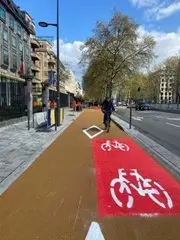
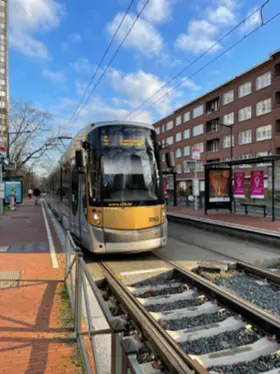
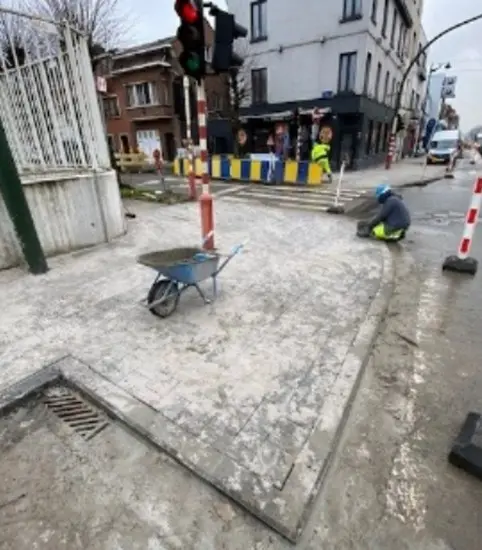
In addition to direct investments, the Region pays particular attention to the maintenance of its various networks, which helps to improve travel conditions. In recent years, the main maintenance programmes (renewing stretches of pavement, annual resurfacing of roads and cycle paths, tunnels, etc.) have therefore benefited from greater financial resources.
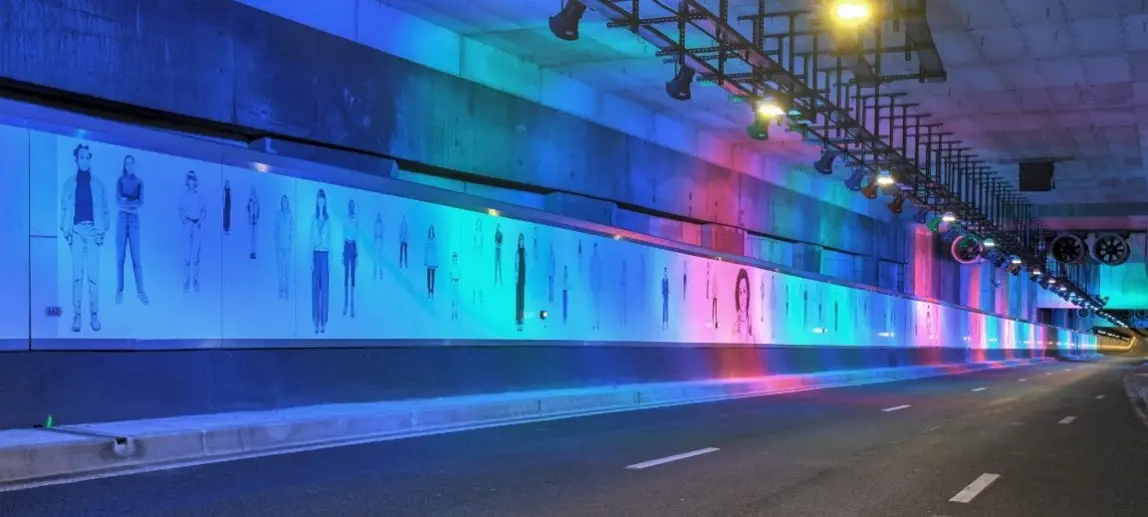
The 2019 Brussels ordinance on tunnels came into effect in 2022 with the adoption of its implementing decree. The Anny Cordy Tunnel was opened in 2022 after 5 years of work and an investment of 500 million euros.
The Region has launched a major programme to improve the safety of pedestrian crossings by tackling illegal parking on its roads, which was obstructing visibility. For more complex junctions, Brussels Mobility has carried out micro-projects to make pedestrian crossings safer. Furthermore, reflecting the importance of accessibility, a task force regularly brings together the directors-general of Brussels Mobility and STIB with representatives from associations for people with reduced mobility. Regarding the accessibility of the STIB network, notable improvements include the redevelopment of stops, an increase in the number of lifts, the implementation of the AccessiBus signage across the entire network since 2021 and on the Noctis network since 2023, as well as the rollout of an audio announcement system in 2022.
traversées piétonnes protégées depuis 2020 (situation du 26/04/2024).
Pedestrian crossings made safer through micro-projects since 2022.
Number of public transport stops made accessible between 2019 and 2023.
metro stations with lift access to the platforms.
Optimising and ensuring the operating conditions of the transport networks continue to guide the actions of Brussels Mobility. This work is sometimes carried out proactively by coordinating roadworks, or in real time with the new "Mobility Manager" role, which allows for traffic monitoring and, if necessary, immediate intervention in the management of traffic lights.
In order to ensure good operating conditions for the networks, knowledge of their condition is also necessary, particularly to be able to schedule maintenance at the right time. The efforts undertaken in recent years have thus enabled an audit of the PLUS pedestrian network. Furthermore, Brussels Mobility now uses a new asset management tool to monitor the condition of infrastructure and structures in a centralised and standardised way. This allows it to optimise investment and maintenance costs. This asset management tool has been operational since March 2024. Maintenance work on tunnels and traffic lights is already being tracked using this tool.
Ensuring good operating conditions is also a major issue for public transport, for which several actions are helping to resolve black spots (where network performance could be significantly improved as a priority): creating bus or tram-only contraflow lanes, or equipping junctions with remote controls for public transport traffic lights.
junctions connected to the traffic light control centre.
junctions equipped with the MS12 traffic light remote control system to give priority to public transport.
A planning permission application has been submitted for the development of a new tram line connecting the Maritime district to the Gare du Nord (North Station). Its route was already incorporated into the construction of the Suzan Daniel bridge. This project will also resolve numerous road safety issues and complete a key link in Brussels' first major pedestrian thoroughfare. The renovation of the Belliard and Loi tunnels is expected to take place in the coming years. Furthermore, efforts and the development of tools aimed at improving the planning of works will continue. Asset management will thus continue its rollout with the gradual integration of new elements: public lighting, road surfaces, signage, etc.
In progress
Under review
To do