
The fiscal process
Who does what within Brussels Fiscality? Learn how each department contributes to the tax process – from rules to refunds.
0. Tax legislation
Everything starts with tax legislation. The Brussels Parliament sets the tax rules based on proposals from the Brussels-Capital Government.
These rules are laid down in ordinances: legal texts that define who is liable for which tax, how the tax is calculated and collected, and what the amounts are.
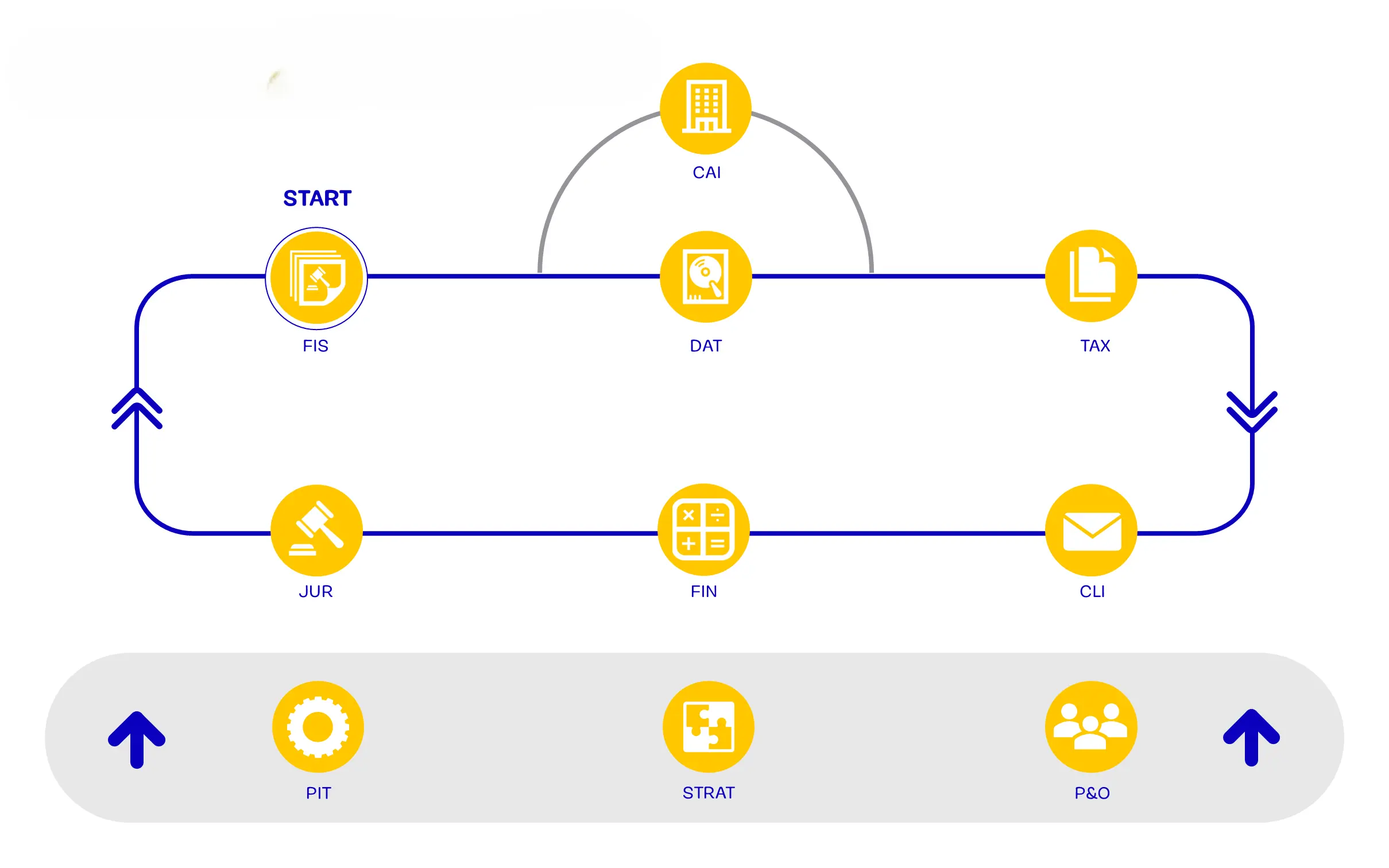
1. Implementing political decisions
The Fiscal Affairs Department (FIS) analyses tax legislation and ensures the implementation of ordinances. As part of its responsibilities, it prepares the various transfers of competences from the federal government to Brussels Fiscality as part of the state reforms.
2. Collecting data
To determine which citizens must pay a certain tax, the Data Management Department (DAT) collects and analyses data from various official sources. For example, to identify who must pay road taxes, Brussels Fiscality uses data from the External linkVehicle Registration Service (DIV).
Some taxes are also levied based on declarations made by the taxpayers themselves. For example, this applies to the tax on tourist accommodation establishments: taxpayers must declare the number of overnight stays by tourists each month.
External linkFollow this link to learn which sources Brussels Fiscality consults to determine tax liability and amounts.
3. Sending the tax bills
Based on the preparatory work of the Data Management Department, the Tax Assessment Department (TAX) calculates the amount that each taxpayer must pay. This department also manages and schedules the sending of declarations and tax bills.
A tax bill is an official document requesting payment of a tax.
4. Assisting taxpayers
Taxpayers with questions about their tax bill can contact the Client Management Department (CLI). This department handles requests submitted via the MyTax platform, by email or by post. It also manages communications and information on different channels like the website, MyTax, social media…
5. Monitoring payments
The Financial Management Department (FIN) monitors payments and manages refunds and requests for payment plans. This department is also responsible for enforced collection procedures, in cooperation with bailiffs.
6. Handling complaints, appeals and objections
Taxpayers who disagree with the content of a document, a decision on their case, or are unhappy with the way their treatment by Brussels Fiscality can submit a complaint, an appeal or an objection. These are handled by the Legal Affairs and Appeals Department (JUR).
Role of other departments
Three departments support the entire fiscal process:
- The Projects & IT Department (PIT) provides powerful digital tools and innovative technologies to optimize efficiency and performance of the whole organization.
- The Personnel & Organization Department (P&O) is responsible for HR, training, and infrastructure, making Brussels Fiscality an attractive employer with an inspiring work environment.
- The Strategy Department (STRAT) handles management control, public procurement, information security, privacy, and coordinates certain projects related to Brussels Fiscality’s corporate culture.
The Real Estate Acquisition Committee (CAI) operates separately from the fiscal process: it assesses real estate and provides legal advice on draft notarial deeds, on behalf of the public authorities of the Brussels-Capital Region.
More information
External linkClick here for more information on the roles and competences of each individual department of Brussels Fiscality.